Beef Tenderloin with Balsamic Glaze
Highlighted under: Classic Comfort Cooking
I love crafting meals that not only delight the taste buds but also bring elegance to the dinner table. When I combined the richness of beef tenderloin with the tangy sweetness of balsamic glaze, it was a match made in culinary heaven. This dish has since become a go-to for special occasions, thanks to its simple preparation and impressive presentation. With just a few wholesome ingredients, I’ve created a delightful feast that everyone will remember. Let’s dive into this delicious recipe that’s sure to be a hit in your kitchen!
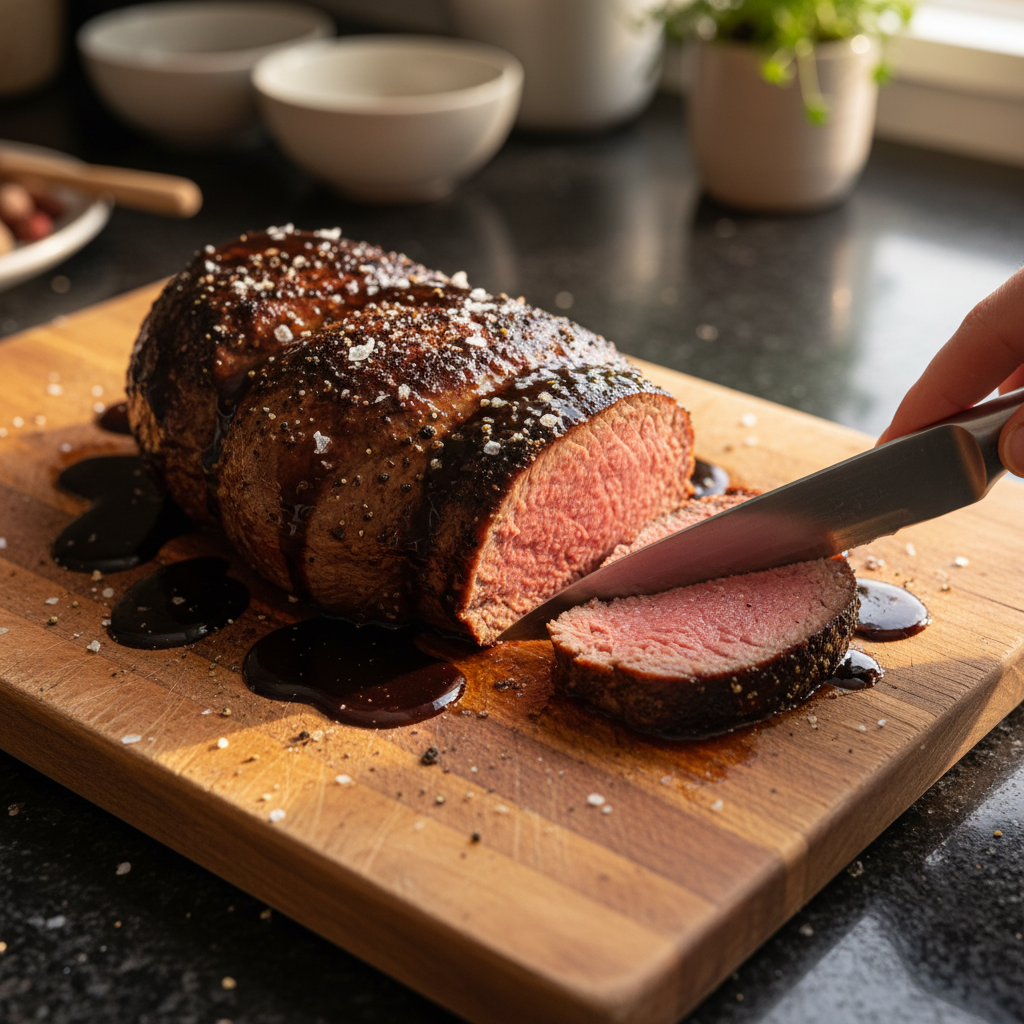
During one of my recent dinner parties, I decided to showcase a dish that could impress my guests without taking up too much time. I opted for beef tenderloin, which is incredibly tender and flavorful, and paired it with a homemade balsamic glaze. I experimented with the glaze by reducing balsamic vinegar with honey, resulting in a perfect balance of flavors that complimented the rich beef beautifully.
As I served the tenderloin, I noticed how the glaze not only enhanced the dish but also created an appealing shine on the meat. I recommend letting the tenderloin rest before slicing; this allows the juices to redistribute, ensuring each bite is succulent. This dish truly transformed my dinner into a memorable experience!
Why You'll Love This Recipe
- Juicy, succulent beef tenderloin that's perfectly tender.
- Sweet and tangy balsamic glaze that elevates the flavor.
- Impressive dish that’s easy enough for weeknight dinners.
The Importance of Quality Ingredients
When it comes to cooking beef tenderloin, the quality of the meat plays a vital role in achieving that melt-in-your-mouth texture. I recommend sourcing grass-fed beef if possible, as it tends to be more flavorful and tender than grain-fed counterparts. Look for beef with a good marbling of fat, as this will render during cooking and enhance the dish's juiciness. A choice cut from a trusted butcher can truly elevate your meal, making the tenderloin a standout centerpiece.
For the balsamic glaze, opt for a high-quality, aged balsamic vinegar. The complexity of its flavors will significantly enhance the overall profile of your dish. If you can't find aged balsamic, a regular balsamic vinegar will suffice; just remember to reduce it a bit longer to achieve a thicker consistency. Be mindful of how you balance the sweetness from honey and the tanginess from the vinegar—this combination is crucial for that perfect glaze that clings to the meat.
Perfecting the Cooking Method
Searing your beef tenderloin before roasting is essential for building flavor. Make sure your skillet is hot enough; you should hear a satisfying sizzle when the meat first touches the oil. I find that a cast iron skillet works best for even heat distribution. Aim for a golden-brown crust, which usually takes about 3-4 minutes on each side. This browning not only adds visual appeal but also deepens the meat's flavor through the Maillard reaction.
When transferring the skillet to the oven, I recommend using an instant-read thermometer to monitor the internal temperature closely. For medium-rare, aim for 135°F (57°C); an overcooked tenderloin can become tough. If you prefer it medium or medium-well, adjust your oven time accordingly, adding about 5 minutes for each additional doneness level. Remember, the meat will continue to cook slightly after being removed from the oven during the resting phase.
Resting and Serving Suggestions
Allowing the beef to rest not only makes it easier to slice but also helps redistribute the juices, ensuring each bite is succulent. A resting time of 10 minutes is generally perfect for a 1.5-pound tenderloin. Keep it loosely covered to retain warmth without steaming the crust you've worked hard to build. This step is crucial for achieving that restaurant-quality finish—don’t skip it!
As for serving, consider pairing your beef tenderloin with seasonal vegetables or a creamy potato puree to complement the richness of the meat. Drizzling the balsamic glaze over the tender slices adds an impressive presentation touch, while the glaze's sweetness creates a beautiful contrast with the protein’s savory depth. You can also serve it alongside a light salad or crusty bread to round out the meal, making it ideal for gatherings.
Ingredients
Gather these ingredients to start your culinary adventure:
For the Beef Tenderloin
- 1.5 pounds beef tenderloin
- Salt and pepper to taste
- 2 tablespoons olive oil
For the Balsamic Glaze
- 1 cup balsamic vinegar
- 2 tablespoons honey
- 1 teaspoon Dijon mustard
- Salt and pepper to taste
Make sure to have these items on hand for perfect preparation.
Instructions
Follow these steps to create this delightful dish:
Prepare the Balsamic Glaze
In a small saucepan, combine balsamic vinegar, honey, and Dijon mustard. Bring to a simmer over medium heat and let it reduce for about 10 minutes until it thickens slightly. Season with salt and pepper to taste, then set aside.
Cook the Beef Tenderloin
Preheat your oven to 400°F (200°C). Season the beef tenderloin with salt and pepper. Heat olive oil in a large oven-safe skillet over medium-high heat. Sear the tenderloin on all sides for about 3-4 minutes each until browned.
Finish Cooking
Transfer the skillet to the preheated oven and roast the tenderloin for about 20 minutes for medium-rare. Use a meat thermometer to check for an internal temperature of 135°F (57°C).
Rest and Slice
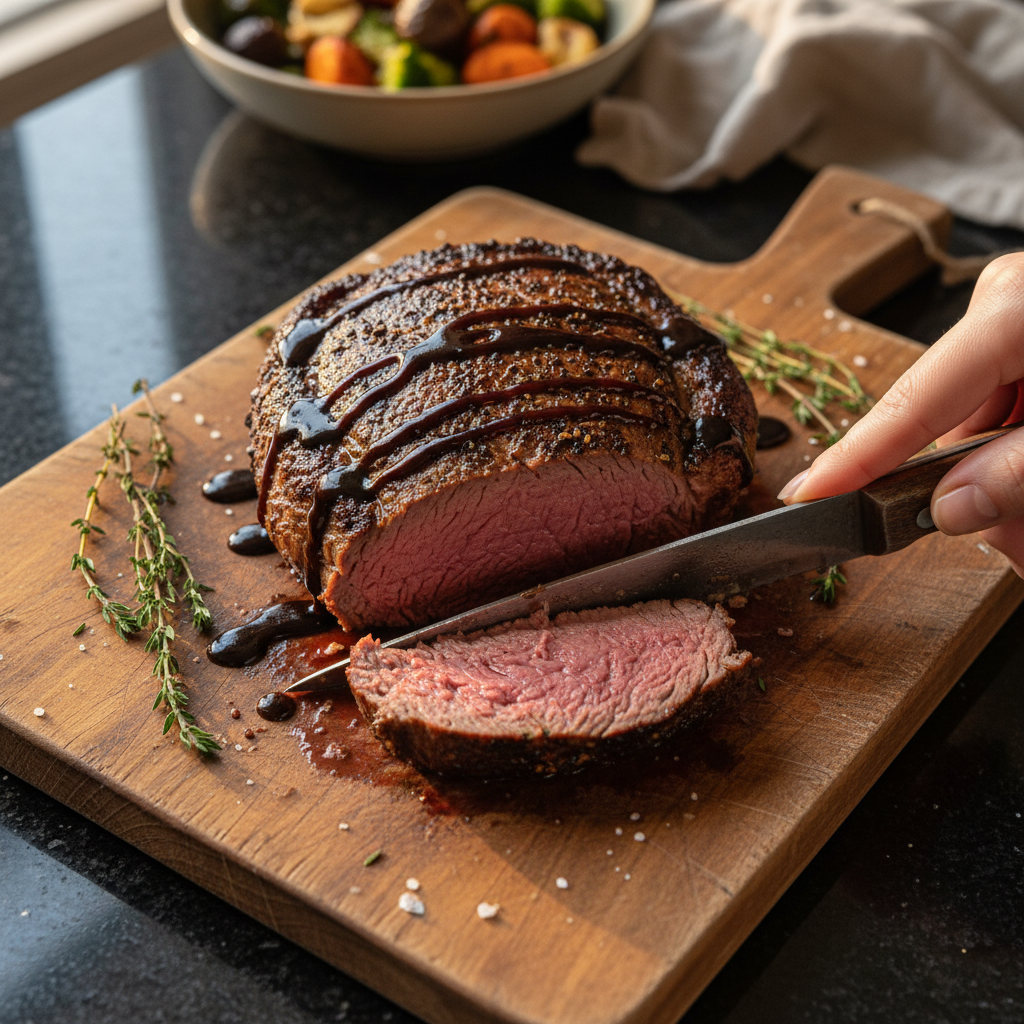
Once cooked, remove the tenderloin from the oven and let it rest for 10 minutes. Slice into medallions and drizzle with the balsamic glaze before serving.
Enjoy your beautifully glazed beef tenderloin!
Pro Tips
- For an extra touch, you can garnish the dish with freshly chopped parsley or serve it alongside roasted vegetables for a complete meal.
Storing and Reheating Leftovers
If you find yourself with leftover beef tenderloin, store it in an airtight container in the refrigerator for up to 3 days. To reheat, gently warm it in a skillet over low heat, covered, to avoid drying it out. You can also add a splash of broth or the balsamic glaze to keep it moist while reheating. This way, you'll still enjoy that juicy texture on your second serving.
For longer storage, consider slicing the tenderloin into medallions and freezing them. Wrap each piece tightly in plastic wrap and place them in a freezer-safe bag. When you're ready to enjoy them, thaw overnight in the fridge and follow the reheating method mentioned above for the best results.
Flavor Variations
Feel free to experiment with the balsamic glaze by adding herbs or spices that you enjoy. Incorporating fresh thyme or rosemary during the reduction process can add a lovely aromatic note that enhances the dish's overall flavor. Alternatively, a hint of garlic can also complement the beef beautifully—just sauté it briefly in the oil before adding your balsamic ingredients.
If you want to switch up the proteins, this recipe can easily adapt to other cuts such as filet mignon or pork tenderloin. Just keep in mind cooking times may vary slightly based on the thickness and fat content of the meat. Following the same searing and roasting techniques will yield delicious results across various proteins.
Questions About Recipes
→ Can I use a different cut of beef?
Yes, while beef tenderloin is preferred for its tenderness, you can also use sirloin or ribeye, adjusting cooking times as needed.
→ How long can I store leftovers?
Leftover beef tenderloin can be stored in the refrigerator for up to 3 days. Reheat gently to avoid overcooking.
→ Can I make the balsamic glaze in advance?
Absolutely! You can prepare the glaze a day ahead and store it in the fridge. Just reheat before using.
→ What sides pair well with this dish?
Mashed potatoes and steamed asparagus or a fresh garden salad complement the flavors nicely.
Beef Tenderloin with Balsamic Glaze
Created by: The Meals By Sophia Team
Recipe Type: Classic Comfort Cooking
Skill Level: Intermediate
Final Quantity: 4 servings
What You'll Need
For the Beef Tenderloin
- 1.5 pounds beef tenderloin
- Salt and pepper to taste
- 2 tablespoons olive oil
For the Balsamic Glaze
- 1 cup balsamic vinegar
- 2 tablespoons honey
- 1 teaspoon Dijon mustard
- Salt and pepper to taste
How-To Steps
In a small saucepan, combine balsamic vinegar, honey, and Dijon mustard. Bring to a simmer over medium heat and let it reduce for about 10 minutes until it thickens slightly. Season with salt and pepper to taste, then set aside.
Preheat your oven to 400°F (200°C). Season the beef tenderloin with salt and pepper. Heat olive oil in a large oven-safe skillet over medium-high heat. Sear the tenderloin on all sides for about 3-4 minutes each until browned.
Transfer the skillet to the preheated oven and roast the tenderloin for about 20 minutes for medium-rare. Use a meat thermometer to check for an internal temperature of 135°F (57°C).
Once cooked, remove the tenderloin from the oven and let it rest for 10 minutes. Slice into medallions and drizzle with the balsamic glaze before serving.
Extra Tips
- For an extra touch, you can garnish the dish with freshly chopped parsley or serve it alongside roasted vegetables for a complete meal.
Nutritional Breakdown (Per Serving)
- Calories: 450 kcal
- Total Fat: 28g
- Saturated Fat: 10g
- Cholesterol: 105mg
- Sodium: 85mg
- Total Carbohydrates: 16g
- Dietary Fiber: 0g
- Sugars: 8g
- Protein: 40g